Built-Up Roofing in Paterson, NJ
Assess built-up roofing in Paterson with surfacing removal, ply and moisture checks, and defined repair quantities that support owner renewal decisions.
Built-Up Roofing
Saturated debris among roof aggregate beside a low area changes the assessment allowance before ownership approves another surface repair. The surfacing needs suitable clearance so the plies and suspected insulation concern can be examined, with removal based on the layers actually found. In Paterson, NJ, we assess built-up roofing as a multi-layer assembly and define the construction beneath its visible surface. The proposal distinguishes surfacing handling, repair and concealed-material investigation at the point where those tasks change cost and timing.
Built-up roofing uses reinforcing plies and bituminous material, with surfacing and flashing appropriate to the selected system. Its repair needs the receiving condition established, not just a covering over a visible defect. We inspect the affected assembly and identify construction at the damaged plies or the investigation required for a wider concern. Ownership receives the area suitable to remain and the finding that could expand removal, allowing the expenditure to follow a defined roof condition rather than its outward texture.
Surface access: Include the material above the repair
Aggregate or another surface layer can obstruct examination and preparation at a damaged detail. We identify the area needing clearance and the handling required before the underlying roofing is assessed. Suitable surfacing outside the repair boundary may remain, while loose or contaminated material in the work area needs an appropriate arrangement. The proposal distinguishes that task from ply removal, giving ownership a practical quantity for reaching the repair rather than describing all surface material as part of the damage.
Surfacing removal also affects debris handling, access and the working period. We agree on the route and protection for material movement with the building representative. A confined area near equipment may require a different sequence from an open field. The resulting repair allowance includes preparation and restoration suited to the assembly found. Ownership can compare that complete work with a broader removal option, instead of receiving a ply price that assumes the receiving area is already exposed and suitable for construction.
Layer condition: Establish the repair that remains practical
A crack or blistered area needs examination of the affected plies and adjoining material before the repair boundary is selected. We assess deterioration, separation and the receiving base, with selected exposure where necessary. A localized defect can permit reconstruction to suitable roofing; widespread instability can change the renewal comparison. The scope identifies that physical finding rather than treating a surface mark as a complete account of the multi-layer assembly or an automatic reason to remove it all.
Permanent repair needs appropriate preparation and compatible material, including a suitable connection to retained layers. We identify those requirements and the task that changes the allowance during exposure. At a corner or wall, the ply repair may meet a separate flashing concern with its own receiving condition. The owner receives those boundaries together so construction can be coordinated at the whole detail. A visually contained defect should not leave the adjoining transition or an unsuitable base outside a repair that depends on their condition.
Insulation question: Confirm the removal extent
Water retained in a low area can prompt investigation of the assembly beneath it, but the removal quantity needs the concealed condition established. We describe the checks and openings needed to identify unsuitable material, including closure of the examination area. Moisture investigation with physical checks may assist where the roof and weather support that method. Ownership receives the findings used to set the construction boundary before damp or deteriorated layers are covered by new work.
A suitable local base can keep reconstruction contained, while broader damage or weakened deck material can require additional assessment. We distinguish insulation removal, deck work and membrane closure in the proposal. The owner can then authorize the necessary task without treating all visible damp surfacing as the same concealed-layer condition. If exposure changes the extent, photographs and measurements explain the revised quantity. That makes the allowance responsive to the material found, with a defined approval point before permanent construction proceeds beyond the initial boundary.
Renewal option: Compare retained plies with tear-off
A recover over built-up roofing requires assessment of the retained material, attachment and applicable requirements. Surface preparation, layer separation and available height at details can influence the new construction. We establish those questions before defining the scope. Comparison with a modified bitumen assembly includes the receiving work and connection details needed for the particular roof, rather than assuming related bituminous materials automatically provide a suitable basis for another layer.
Tear-off can expose a different deck and supporting-layer allowance from a recover. We explain that consequence and identify investigation needed to compare the options. A single-ply thermoplastic replacement also needs suitable receiving layers, attachment and transitions. Ownership can weigh removal, retained construction and future service access for each proposed assembly. The new roof material is considered within that complete scope, keeping the funding decision tied to the building instead of reducing it to the number of layers or appearance of the finished surface.
Paterson stock: Arrange assessment at the requested building
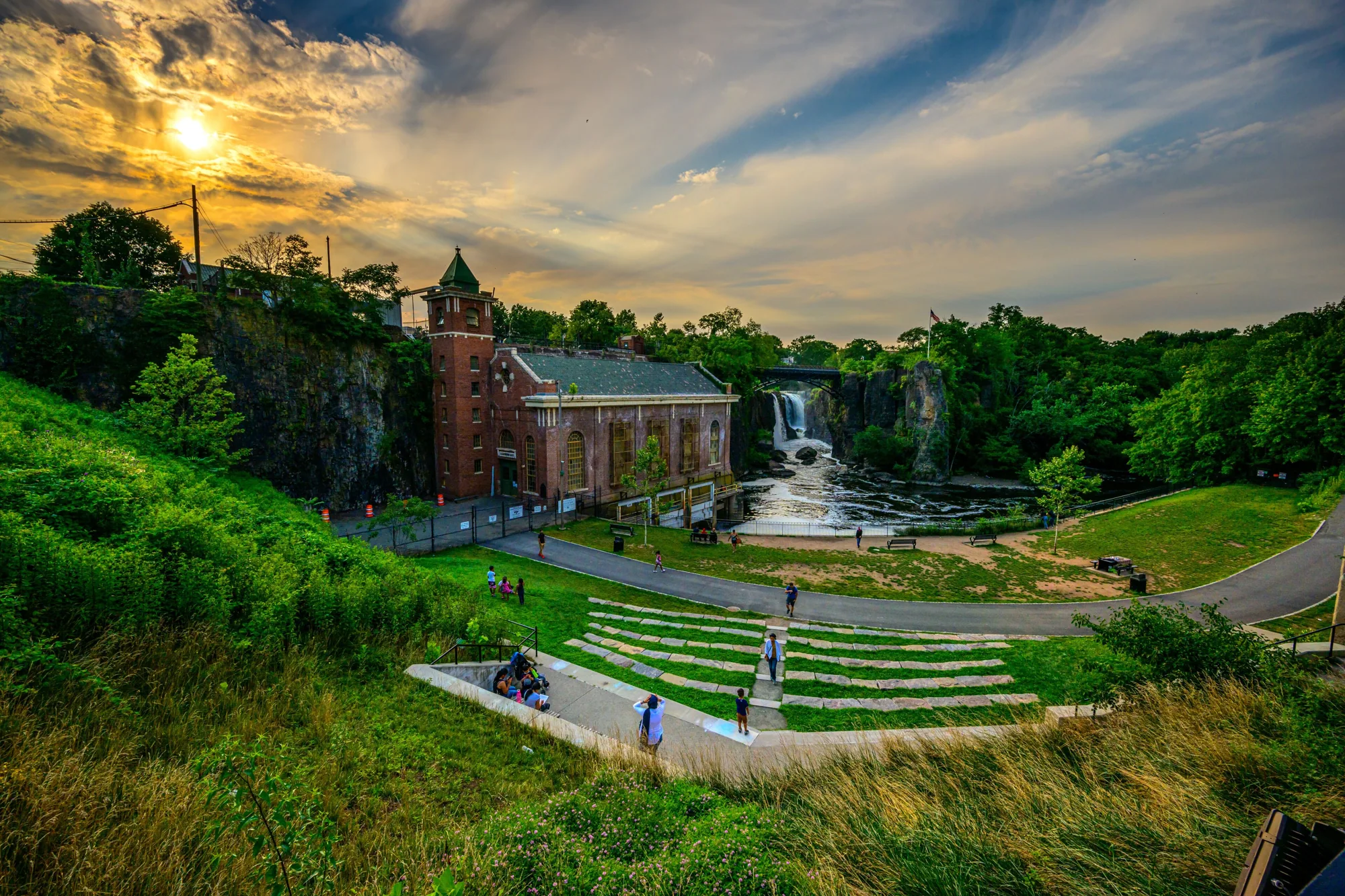
Paterson has tall brick mills and former industrial properties undergoing preservation and reuse. At a requested property, roof access, receiving-wall information and the interior area below removal need examination before a built-up repair is defined. Available installation records and selected checks establish the layers, attachment and receiving conditions needed to price the repair. For roof work at a manufacturing building, equipment service and material movement can affect the period available to expose and reconstruct the affected area.
The Great Falls Historic District retains mills from Paterson’s industrial development, while Fair Lawn has industrial properties in the McBride district near Glen Rock. An occupied property in Fair Lawn may have a different delivery and interior arrangement from a Paterson mill building. We agree on the actual route and the task needing access before setting the scope. Ownership receives protection and handling requirements with the repair quantity, allowing the working date to reflect construction at the particular property rather than a general assumption about industrial access.
Completed area: Preserve drainage and repair visibility
A rebuilt area needs suitable integration with retained roofing and a usable water path. We examine the repaired plies, flashing and surfacing before handover, identifying any adjoining concern outside the approved boundary. An outlet connection requiring correction remains distinguishable from the field repair, even where the work shares access. Ownership can track which task has been completed and which water-path question still needs investigation, avoiding a handover that treats new surfacing as confirmation of all surrounding drainage conditions.
Ongoing inspection includes accessible flashing, outlets, surface displacement and damage after equipment activity. We identify the repaired locations and the access needed to examine them again. Debris accumulating at the same low area warrants attention to its collection route alongside cleaning. Later construction should preserve compatible roofing materials and the maintained water path. That gives ownership a task-specific upkeep allowance and a record for future changes, with new damage assessed independently of the earlier repaired boundary rather than hidden beneath another broad surface treatment.
Commercial Roofing Questions
Does wet material among the aggregate establish how much insulation must be removed?
The underlying layers need investigation to define their condition and extent. We clear the appropriate examination area and arrange physical checks where required. The removal quantity follows unsuitable material found, with surfacing handling distinguished from concealed-layer construction.
Can a built-up roof defect be repaired without broad tear-off?
A contained area may permit reconstruction to suitable adjoining plies and receiving material. We assess that boundary before proposing permanent work. Wider separation, moisture or deck concerns can change the option, with their construction consequences explained before approval.
Why might surfacing handling change the working period?
Access, equipment placement and the material removal route affect how the repair area is exposed. We agree on those arrangements with the building representative. The proposal includes preparation and restoration, rather than pricing ply repair as though the receiving surface were already available.
What should a comparison with a single-ply renewal include?
Removal, retained condition, supporting layers, attachment, drainage and transitions all affect the construction. We define those tasks for each option. Ownership can compare complete assemblies and their access requirements instead of choosing only by the surface material or layer description.
Establish the built-up repair quantity
Send the building location, affected area, surfacing condition, available roof records and decision date. We will define access to the plies, concealed-layer checks and repair or renewal construction for your approval.