Commercial Roof Inspection in Paterson, NJ
Inspect a commercial roof in Paterson for specific seam, drainage and flashing conditions, with photographed findings that support repair and funding decisions.
Commercial Roof Inspection
A drain clamp lifting away from its connection can turn a deferred maintenance item into a repair that needs prompt approval. Its condition should be examined alongside the surrounding membrane and water path before the owner funds either cleaning or reconstruction. In Paterson, NJ, we inspect accessible roof components closely, identify the finding that changes the work decision and describe any further investigation needed. The assessment connects physical conditions with useful actions, rather than leaving ownership with photographs and a broad description of roof age.
We examine membrane fields, seams, penetrations, perimeter details, equipment connections and drainage. The requested purpose helps establish the inspection scope: a recurring leak, a proposed repair, a renewal decision or an upcoming property transaction each raises different questions. Findings can support a measured repair allowance or a further assessment where concealed layers affect the choice. We identify those boundaries before treating an accessible-surface observation as a complete assembly conclusion.
Requested decision: Define the inspection scope
A proposal to recover an existing roof requires information about retained layers that a routine walk-through may not provide. We discuss the owner’s intended decision before choosing the inspection and any selected openings. Available installation records, repair history and plans can identify details worth examining, but their accuracy is checked against the roof found. The scope should describe which areas will be accessed and which questions require a separate method or additional authorization.
Timing also matters. An inspection before a renewal approval can influence the assembly and removal allowance; an inspection after equipment work can focus on its new connections and access routes. We ask which decision date or construction event the findings need to support. That helps distinguish a condition requiring immediate protection from an item that can be priced for planned work. Ownership receives an assessment suited to the requested decision rather than a standard set of observations unrelated to the work being considered.
Accessible details: Examine the weak connection
A seam that opens under close examination needs a different response from a superficial mark on intact membrane. We inspect seams and transitions using methods appropriate to the roof system, looking for separation, deterioration and unsuitable earlier repairs. At curbs and walls, attachment and receiving material can change whether local repair remains practical. We identify the component, its location and the condition that supports the proposed action, allowing the owner to connect the finding with a specific detail.
Perimeter inspection includes metal connections, membrane terminations and signs of movement. We also look at protection along equipment service routes and the condition of supports in contact with the roofing. Inspection can reveal where localized membrane damage needs correction or where repeated contact requires a wider change. An isolated repair quantity should reflect suitable adjoining material, while observations spread across several roof sections may justify further investigation before a contained allowance is approved.
Water collection: Separate blockage from elevation
Debris at a drain can interrupt the water path without explaining every area of standing water. We examine strainers, drain flashing, scuppers and the surrounding surface where accessible. Water marks and accumulated debris can help identify drainage patterns, but the inspection also needs to consider outlet position and local elevations. We distinguish cleaning or connection repair from a slope condition that may require design work. The owner can then fund the correction appropriate to the actual finding.
Where drainage components need repair, we describe the roofing boundary and any piping or structural work that belongs with another trade. A visibly damaged connection may permit a localized scope; a low area affecting a larger roof section can change the assembly decision. We explain which measurement or opening would resolve that question. This prevents a cleaning allowance from standing in for an elevation correction while keeping straightforward maintenance separate from more involved roof construction.
Paterson buildings: Match access to the property
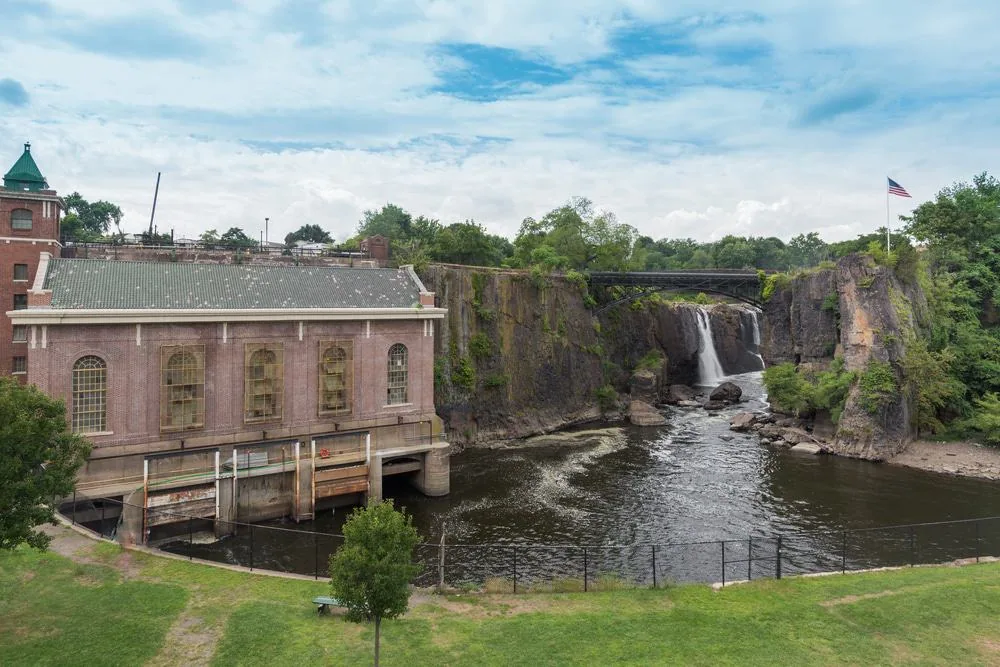
Former brick mill buildings remain part of Paterson’s stock and are undergoing preservation and reuse. Inspecting a roof at such a property requires attention to the wall connections, deck information and equipment arrangement actually present. The building’s history helps identify questions, but the condition found determines the proposed work. We establish how to reach the roof and which interior or exterior areas need permission before selecting an inspection route or authorizing exposure near a transition.
Riverside includes industrial uses near Madison Avenue and Route 20, while Downtown Paterson has commercial and civic buildings. At a particular occupied office property or industrial building, escorts, roof hatches and equipment service restrictions may affect the accessible inspection area. We agree on those conditions with the building representative and identify inaccessible components that still matter to the decision. A useful assessment shows the owner where access limited the findings and what additional arrangement would allow that concern to be examined.
Further investigation: Price the unanswered question
A soft area underfoot or recurring leak history can indicate a concealed concern requiring more than surface inspection. We discuss appropriate investigation, including selected openings or an infrared survey with physical checks where suitable. The proposed method should answer a defined question about moisture, layer condition or attachment. We identify the opening location and restoration requirements, so the owner understands the work being approved and the condition it is intended to reveal.
Different questions can require different trades. A weakened deck may need structural assessment, while an equipment discharge issue may need mechanical investigation. We distinguish those conditions from roofing details that can be priced directly. The inspection then supports a sequence: address urgent exposure, obtain the additional finding and finalize the permanent scope. It avoids assigning a removal quantity to every suspicious surface mark, while giving ownership a concrete way to resolve uncertainty before committing to larger work.
Repair priority: Carry the finding into approval
Photographs need a location and an explanation of the relevant condition. We prepare roof findings with repair priorities that relate each concern to a component and proposed next action. Items are distinguished by exposure, consequence and the investigation needed, rather than being listed as equally urgent. Ownership can use that separation to authorize immediate protection while arranging a later working period for repairs that require equipment coordination or material removal.
We also describe usable material that remains outside the proposed repair boundary and any condition that could change the allowance during exposure. That makes the findings practical for comparing proposals and revisiting the roof after work. An inspection is a view of conditions at its working date; later equipment activity or weather can create new damage. We therefore identify follow-up points tied to the building’s use and completed corrections, keeping the next inspection decision connected to a known component instead of a vague instruction to watch the roof.
Commercial Roofing Questions
Can the inspection support an overlay approval without openings?
Accessible observations may leave retained-layer count, moisture or attachment unresolved. We identify the information still needed and propose investigation that answers it. Recover suitability should be assessed against the assembly, not only its visible top surface.
How do you prioritize a drain issue against a worn seam?
We compare the observed opening, water exposure and likely consequence at each location. A failed drain connection may need prompt correction, while another item can fit planned work. The report describes that reasoning and the next action for each concern.
What happens if the roof hatch prevents access to part of the building?
The findings identify the unexamined area and its relevance to the requested decision. We discuss an alternate access arrangement where needed. Ownership can then authorize that additional inspection before relying on a scope that depends on the missing area.
Will the inspection identify a price for every photographed condition?
Some details can be measured and priced directly. Others need exposure, design or another trade before the permanent quantity is established. We separate those items so the owner can approve the investigation required to complete the pricing decision.
Set the inspection decision
Send the building location, roof concern, access arrangement, available installation records and the approval or transaction date. We will establish the inspection scope and the findings needed for your next roof decision.