Roof Coating Restoration in Paterson, NJ
Assess roof coating restoration in Paterson with adhesion checks, moisture investigation and preparation scopes that clarify repair cost and application timing.
Roof Coating Restoration
Water held beside an outlet raised above the surrounding roof changes the restoration allowance before coating is approved. Ownership needs a decision on correcting that drainage detail and its adjoining surface, because a new treatment leaves the elevation problem in place. In Paterson, NJ, we assess commercial roof restoration at that approval point. The proposal connects the roof found with the repairs, preparation and application needed, so a coating price does not leave essential substrate work unresolved.
A restoration system can help protect suitable roofing while retaining material that remains serviceable. Its usefulness depends on the assembly beneath it, the drainage and the connections receiving treatment. We inspect those conditions and identify the findings that change the option. Where a detailed roof examination reveals damage beyond a practical restoration boundary, ownership needs a comparison with repair, recover or removal rather than a thicker application over a failing base.
Existing surface: Establish the preparation requirement
Chalking, accumulated dirt and an earlier treatment can interfere with the new system’s bond. We examine the surface and arrange suitable cleaning and adhesion evaluation before defining the preparation scope. The selected products need to suit the roofing material and the condition revealed. A successful test in one area still needs to be considered alongside changes elsewhere on the roof, such as a different membrane, old patch or surface exposed to equipment discharge.
Preparation may include removal of loose material, cleaning, drying and an appropriate primer. Each task affects the working period and the surface area ready for application. We distinguish those requirements in the proposal and identify the condition that could expand them. Ownership can then compare offers on the base actually being prepared, rather than comparing application quantities while one scope includes unstable coating removal and another leaves it in place. A suitable surface is part of the restoration decision, not an optional finishing step.
Material beneath: Resolve moisture before covering it
A damp insulation area requires a removal decision that a surface coating cannot make disappear. We investigate suspected moisture and identify the affected assembly where physical checks are needed. The proposed repair includes suitable adjoining material and closure of any opening. Ownership should understand how that removal changes the restoration quantity, access and disposal before authorizing treatment across the remaining roof. Retaining wet or deteriorated layers can leave the original repair problem beneath a new surface.
An investigation of concealed wet areas may assist in locating checks where roof and weather conditions permit. We use the findings to define a repair boundary rather than assigning removal to every surface discoloration. Deck deterioration or extensive damage can require a separate structural or renewal assessment. The resulting scope identifies what remains and why it can receive the proposed treatment, with the change in work explained at the point where an opening reveals unsuitable material.
Seams and transitions: Restore movement-sensitive details
An open lap at a penetration needs a repair suitable for that connection before general field treatment proceeds. We examine seams, wall terminations, curbs and perimeter components for separation, movement and incompatible patches. Depending on the assembly, work can include replacement of a failed component, reinforced treatment or another specified detail. Ownership receives the proposed connection repair and its quantity, rather than a general statement that all visible defects will be covered during application.
Changes in material at a wall or equipment curb can move differently from the roof field. We assess the receiving surfaces and provide suitable reinforcement or construction where required. Repairing a failed flashing transition may involve more preparation than the surrounding membrane. If equipment blocks the connection, relocation or trade coordination needs to be included in the schedule. That detail can determine whether the restoration is practical within the requested shutdown period, even where most of the visible roof remains accessible.
Application choice: Compare the actual exposure
Water remaining around a low area affects product selection and may call for drainage correction before coating. We assess the outlet, surface condition and intended system requirements together. A silicone treatment for suitable roofing and an acrylic system have different application and service considerations. The proposed material should match the substrate and expected exposure, with preparation and detail work included in the comparison. Its name alone does not establish suitability for the roof found.
Application requirements include the specified quantity, coverage, curing conditions and treatment at details. We identify how those requirements will be met and checked during the work. A change in substrate or earlier coating can require a different preparation step or a separate test. Ownership can approve that work before production proceeds across the affected area. Where the roof has persistent drainage problems, the comparison also includes their correction rather than treating a material choice as a substitute for a functioning water path.
Occupied property: Price access and curing time
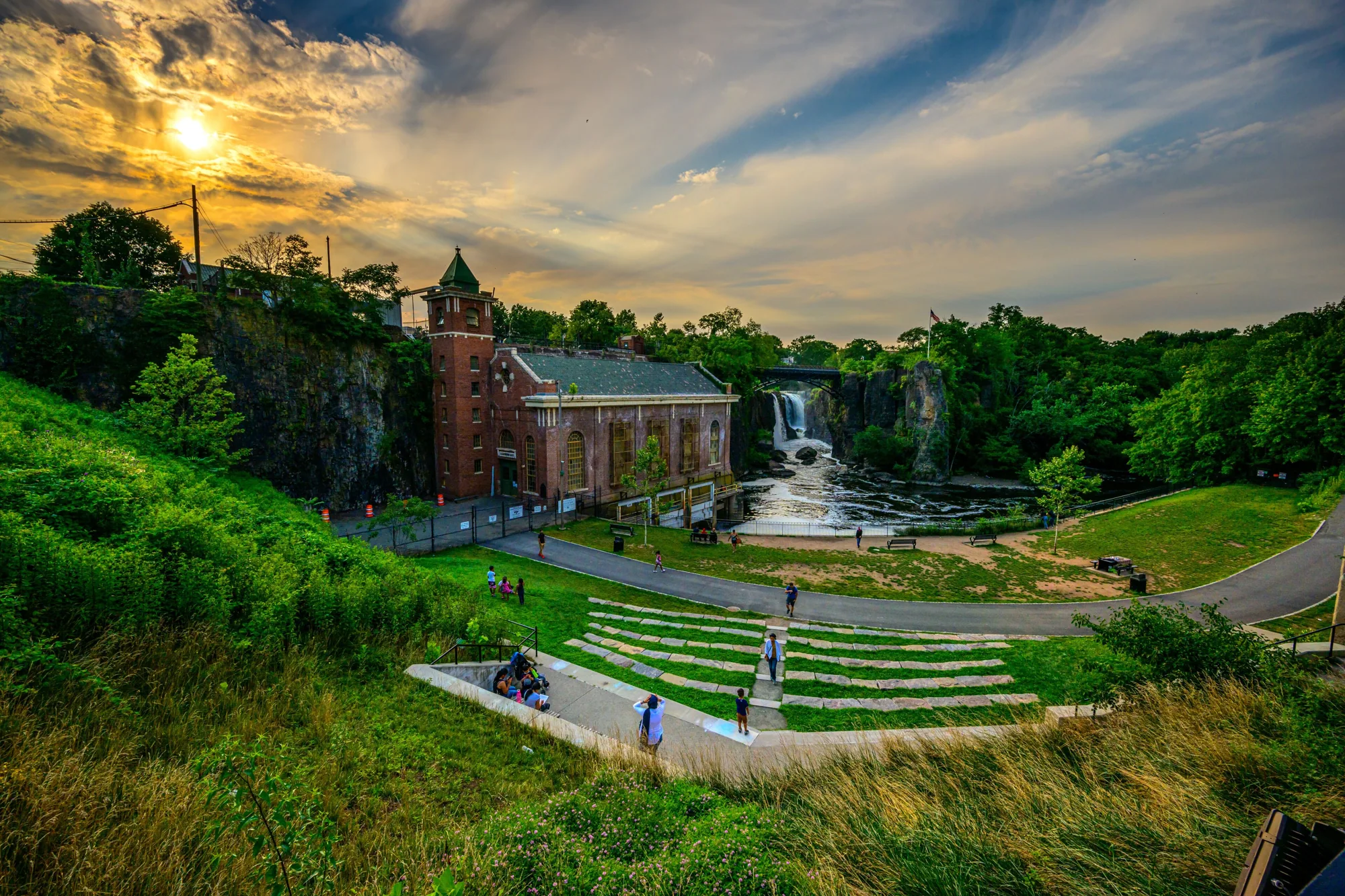
Paterson retains former brick mill properties that are being preserved and adapted for new uses. At an occupied property, wall transitions, roof access and equipment arrangement can affect the restoration sequence. We inspect the connection and agree on the work area for the requested building before arranging material delivery. A roof divided by equipment or different levels may need separate preparation and application periods, which should be reflected in the proposed timing and protection.
Riverside combines residential buildings with industrial uses near Madison Avenue and Route 20. A manufacturing property’s roof work can require coordination near intake equipment and service routes. In Downtown Paterson, Main and Market streets support commercial activity, making entrance and delivery arrangements relevant to an affected building. We discuss the product’s handling and curing requirements with the building representative, then establish which equipment activity or access restriction needs to change during the application period.
Remaining service: Compare restoration with renewal
A sound field with repairable details presents a different funding choice from a roof with widespread separation and concealed deterioration. We describe the conditions supporting restoration and the work still required to make it practical. The comparison considers preparation, removal, drainage changes and future maintenance alongside the application itself. Ownership can weigh that scope against removal and a new assembly without reducing the decision to a coating price per area or the age of the existing roof.
Completed restoration also needs a continuing inspection plan. We identify treated details, repaired areas and equipment routes that should be checked after work. Later mechanical activity can damage the surface or introduce a new penetration, requiring a compatible repair. The handover describes those maintenance needs and any areas outside the completed scope. That gives ownership a defined responsibility for the retained roof and a basis for evaluating later work, rather than treating the new surface as a reason to stop examining its connections.
Commercial Roofing Questions
Does a failed adhesion check rule out restoration across the entire roof?
Failure calls for investigation of the affected surface and preparation method. A different treatment or removal of unstable material may establish a suitable base. We assess the extent before changing the proposal, so ownership can distinguish a localized preparation issue from a broader assembly problem.
Can the coating allowance include removal of wet insulation?
Wet-layer removal can be included once its extent and closure details are established. We separate that construction quantity from field application. An opening that reveals additional damage requires an updated boundary and approval before unsuitable layers are concealed by the completed repair.
How should I compare two restoration proposals using different materials?
Compare their substrate preparation, detail repairs, drainage work and application requirements alongside the material selected. We explain those items for the roof being treated. A lower application price may leave necessary preparation or connection reconstruction outside the proposed work.
What happens if equipment work is planned after the coating application?
New equipment can alter service routes and flashing requirements. We coordinate the sequence so construction does not immediately damage finished treatment. Where later work remains necessary, the scope identifies suitable protection and the roof repairs needed after the mechanical changes are completed.
Resolve the restoration allowance
Provide the building location, existing roof material, coating history, suspected moisture areas and approval date. We will assess preparation and repairs, then price the treatment that suits the assembly and working period.